Table Saw Blade Direction: Which Way Does It Go On?
Table saw blade direction is set by the rotation arrow: match the arrow on the blade to the arrow on your saw, so the teeth at the top point toward the front. Your manual shows the exact arbor and washer order for your model.
On this page (9 sections)
- Check the rotation arrow on the blade first
- Which way do the teeth point at the top?
- What happens if the blade goes on backward
- How to fit the blade in the right order
- Why the blade direction matters on a table saw
- Blades with different tooth patterns
- Common mix-ups with the blade arrow
- When to check your manual
- Fit the blade with care
On most table saws, the blade goes on with the teeth at the top pointing toward the front of the saw, and the rotation arrow on the blade matches the arrow on the saw. Your saw's manual shows the exact order for the arbor washer and nut on your model.
This guide explains how to read the arrow and why the direction matters. It's a short check, but it's one you should make every time you fit a blade.
Check the rotation arrow on the blade first
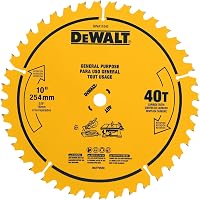
Most table saw blades have an arrow printed on the body that shows which way the blade should spin. Find that arrow before you fit the blade to the saw.
Compare the blade's arrow with the arrow on your saw's guard or body. Your manual shows where the saw's arrow is, since placement differs by model.
Which way do the teeth point at the top?
On most table saws, the teeth at the top of the blade point toward the front of the saw, toward the operator. That's the direction the blade turns when the saw runs.
If the arrow and the teeth don't agree, don't force the blade on. Take it off, turn it around and check the arrow again.
What happens if the blade goes on backward
A blade fitted backward won't cut the way it was made to. The teeth point the wrong way, so the cut can come out rough and harder to control.
Check the arrow before you tighten the arbor nut. If you've already tightened it, loosen the nut with the wrench the manual names and check again, with the saw unplugged.
How to fit the blade in the right order
Unplug the saw before you fit or remove a blade. The manual lists the wrench, the arbor washers and the nut order for your model, and it's the reference for every step.
Fit the blade and the washers in the order the manual shows, then tighten the nut to the level it describes. Turn the blade by hand before you plug the saw back in, and check that it turns freely and the guard sits in place.
Our how to change a table saw blade guide walks through the blade swap in more detail.
Why the blade direction matters on a table saw
The blade's rotation has to match the motor's rotation, so the blade cuts as the saw was built to. A blade that spins the wrong way won't match the teeth the saw was designed around, and the two arrows are how you check that they agree.
The teeth are also shaped for one direction of feed. Follow the manual on feed direction and fence setup, since they matter on every cut.
Blades with different tooth patterns
Combination blades, fine-finish blades and rip blades all have a rotation arrow, and the check is the same for each. The tooth pattern changes the cut, but not the direction you fit the blade.
Our best table saw blades roundup compares five 10-inch blades by tooth count and pattern.
Common mix-ups with the blade arrow
The most common mix-up is reading the arrow from the wrong side of the saw. Stand where you'd stand to run the saw, then compare the blade's arrow with the saw's arrow from there.
Another mix-up is fitting the arbor washers out of order. The manual shows that order, and a wrong order can leave the blade sitting unevenly.
A third mix-up is trusting the look of the teeth alone. Use the printed arrow and the saw's arrow as the reference, and treat the teeth as a second check.
Table saw blade direction on a rip blade
A rip blade such as the Freud glue line blade has the same arrow and the same check as any other blade. Its tooth pattern changes the cut, not the direction you fit it, so don't let the tooth shape distract you from the arrow.
When to check your manual
Check the manual any time the arrow, the arbor size or the blade diameter is unclear. The manual sets what your saw takes, and the blade you buy has to match it.
If the arrow, the diameter and the arbor all check out but the blade still looks wrong, stop and recheck the washer order before you run the saw.
For the full setup steps, see how to use a table saw. For the rules on guard and riving knife placement, read our table saw kickback guide, which points to the manual.
Fit the blade with care
Table saw blade direction is one check you make every time you fit a blade. Check the arrow, unplug the saw and follow the manual's order for the washers and nut.
Then turn the blade by hand before you plug the saw back in.
Wear eye and ear protection when you run the saw, and keep your hands clear of the blade path.
Frequently asked questions
Which way does a table saw blade go on?
Match the rotation arrow on the blade to the rotation arrow on the saw. On most table saws, the teeth at the top of the blade point toward the front of the saw, but the arrow and the manual decide for your model.
What happens if a table saw blade goes on backward?
A blade fitted backward won't cut the way it was made to, and it can make the cut rough or hard to control. Check the arrow before you tighten the arbor nut, and take the blade off if the arrow points the wrong way.
Where is the rotation arrow on a table saw?
Look for the arrow on the blade itself, and compare it with the arrow on the saw's guard or on the saw body. The manual shows where the saw's arrow sits, since placement differs by model.
Do I need the manual to change a table saw blade direction?
The manual shows the arbor washer and nut order, the wrench to use and the steps to unplug the saw first, so follow those for your model before you fit a blade.