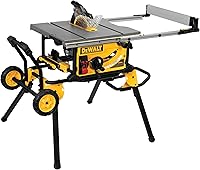
DeWalt DWE7491RS 10-Inch Table Saw With Stand Review: Worth It? (October 2026)
The DeWalt DWE7491RS is a 10-inch, 15 amp table saw on a foldable rolling stand, with a 32-1/2 inch rip capacity. It suits a fixed shop or garage bay with room for the stand and for wide boards or sheet goods, and it's a poor fit for a tight space.
On this page (16 sections)
- The DeWalt DWE7491RS at a glance
- Are DeWalt table saws good for wide rips?
- The rolling stand and how it moves
- Rip capacity, sheet goods and support
- Fence, guard and storage
- Check the fence before the first cut
- Power, brake and blade speed
- Safety setup on a stand-mounted saw
- Who should buy the DWE7491RS
- Who should skip it
- Setup in the first hour
- Blade and tooth count
- Space planning around the saw
- Alternatives to compare
- DWE7491RS or the Bosch GTS15-10?
- Verdict on the DWE7491RS
The DeWalt DWE7491RS is a 10-inch table saw on a foldable rolling stand. It has a 15 amp motor and a 32-1/2 inch rip capacity, which is the widest rip among the saws we cover.
This review covers the stand, the rip capacity, the fence and guard setup, the brake and who should skip the saw.
The DeWalt DWE7491RS at a glance
DEWALT DWE7491RS 10-Inch Table Saw With Stand

- 10-inch blade, 15 amp, 4800 rpm motor
- 32-1/2 inch rip capacity
- Foldable rolling stand with wheels
- Rack and pinion telescoping fence
- Brake
- Onboard storage for the guard and riving knife
A 10-inch saw on a foldable rolling stand with the widest rip capacity in this group, for a fixed shop with room for wide boards.
Pros
- 32-1/2 inch rip capacity
- Foldable rolling stand with wheels
- Rack and pinion telescoping fence
- 3-year limited warranty from DeWalt
- Onboard storage for the guard, riving knife and wrenches
Cons
- About 110 pounds with the stand, so it stays put
- Its footprint takes more floor space than a compact saw
- Sheet goods still need support on both ends, which the stand doesn't provide
It's a 10-inch saw with a 32-1/2 inch rip capacity, a 15 amp motor and a foldable rolling stand. The stand has wheels, so the saw can roll from one spot to another.
Buy it for a fixed shop with room for the stand, and for wide boards or sheet goods you rip often. Skip it if you need a compact saw for a small space or a saw you can carry.
Are DeWalt table saws good for wide rips?
For wide rips on a stand, the DWE7491RS covers the job well, as long as the stand has room and the board has support. Its rip capacity is the main reason to buy it over a compact saw.
The rack and pinion telescoping fence adjusts smoothly, and the saw lists a brake among its features. Those two points cover the fence and the stopping features.
DeWalt lists common uses such as ripping filler boards, floor boards, deck boards and sheet goods. Those are the jobs a wide rip is for, so check that your work matches them before you buy.
DeWalt DWE7491RS rip capacity for wide boards
The 32-1/2 inch rip capacity is the distance from the blade to the far side of the fence. It takes wider stock than a compact saw can, which matters for shelving, trim and plywood.
It doesn't mean you can rip anything. A wide board still needs support at both ends, and a wide sheet still needs a plan for the outfeed side.
The rolling stand and how it moves
The foldable stand is the main reason this saw works in a shop that moves its tools around. DeWalt says the stand sets up and breaks down easily, and it has wheels for moving the saw.
The stand folds, which helps when the saw has to fit in a corner. DeWalt describes the stand as stable, so check its setup before the first use.
At about 110 pounds with the stand, the saw isn't light. Plan the path and the spot before you move it, and make sure the stand is stable before you cut, as the manual directs.
Rip capacity, sheet goods and support
A 32-1/2 inch rip capacity handles wide boards and sheet goods, but a full sheet is heavy and needs support on both ends. Those two facts shape how you'll use the saw.
Wider stock is where a bigger saw pays off. The rip capacity sets the widest piece you can cut in one pass, so measure your widest board before you buy.
A full sheet still needs support on both ends, and the stand doesn't provide that on its own. Plan an outfeed support, and check the manual for the cut method it allows.
Fence, guard and storage
The rack and pinion telescoping fence and the onboard storage make the saw easier to set and keep tidy. Both matter more on a saw you use for long sessions.
The telescoping fence rails are rack and pinion, and DeWalt says that makes fence adjustments fast, smooth and accurate. DeWalt also says the guarding can be adjusted without tools.
The onboard storage holds the blade guard assembly, the fence, the riving knife, the miter gauge, the wrenches, a push stick and the cord wrap. DeWalt also describes a patented material support for narrow rip cuts.
Check the fence before the first cut
A fence that isn't parallel to the blade makes a board bind or drift. Check it before the first cut, and again after you move the saw.
Set the fence against the blade's position, following the manual's method. A shift from moving the saw or changing the stand can throw off the cut, so recheck the setting after any move.
If the fence drifts or a board binds, turn the saw off and wait for the blade to stop before you adjust the setup. The manual has the adjustment steps for your saw.
Power, brake and blade speed
The 15 amp motor runs at 4,800 rpm, and DeWalt lists a brake among the saw's features. Those are the two numbers to note when you compare it with other saws.
Blade speed matters less than the blade you pick for the job, so don't choose a saw on rpm alone. The brake helps the blade stop after you switch off, but it isn't a substitute for the guard or the manual's rules.
Plug the saw into a circuit that can carry its 15 amp rating, and don't share that circuit with other heavy tools.
Safety setup on a stand-mounted saw
A stand doesn't make the saw safer on its own, so set the guard, riving knife and push stick as the manual directs. Those setup steps matter more than the stand.
Keep the riving knife aligned with the blade, the guard moving freely and a push stick at hand for narrow pieces. Wear eye and ear protection, and keep your hands clear of the blade's path.
Read table saw kickback before your first rip. It explains what kickback is and what the manual says about avoiding it.
Who should buy the DWE7491RS
Buy it for a fixed shop with room for the stand and a regular need for wide rips. It suits a garage bay or workshop that rips wide lumber, shelving and sheet goods.
The 3-year limited warranty from DeWalt gives more time to claim than the 1-year warranty on the Bosch GTS15-10. If you want to compare the two directly, DeWalt DWE7491RS vs Bosch GTS15-10 covers the stand, brake and warranty differences.
Who should skip it
Skip it if you need a saw for a small space, or a saw you can carry. At about 110 pounds with the stand, it stays where it's set up.
A compact saw suits a smaller room. The DeWalt DWE7485 review covers the 8-1/4 inch model, which takes less floor space.
Setup in the first hour
Set the stand, the fence and the guard before the first cut, and check that the saw sits level. A saw that rocks on its stand makes every cut harder to control.
Lock the stand's wheels or set it in place as the manual directs. Then check the fence against the blade and confirm the riving knife lines up with the blade.
Blade and tooth count
DeWalt's spec for this saw lists 24 teeth on the 10-inch blade, which suits general rips and crosscuts. Blades with fewer teeth clear wood quickly, which suits rips in solid lumber and sheet goods.
For a finer edge on furniture work, a higher tooth count gives a smoother cut at a slower feed. The best table saw blades roundup covers tooth counts and blade types for home woodworking.
Space planning around the saw
The footprint is about 31 by 24 inches, but a wide board needs room to move past the saw. Plan a clear path on both sides and room behind the fence for long stock.
A garage bay with a wall behind the saw gives you room to move. Keep the outfeed side clear of obstacles so the board moves steadily.
Alternatives to compare
Two other saws help put the DWE7491RS in context. One is a compact saw for a small shop, and the other is a 10-inch saw on a stand that lifts for moving.
For a 10-inch saw with accessories in the box, the Evolution R10TS review is the one to compare. For a wider look at the field, read best portable table saws.
DWE7491RS or the Bosch GTS15-10?
Both are 10-inch saws on wheeled stands with rip capacities a fraction of an inch apart. The stand and the warranty decide the choice.
The DeWalt folds its rolling stand and has a 3-year warranty. The Bosch lifts its stand with a foot pedal and has a 1-year warranty.
DeWalt DWE7491RS vs Bosch GTS15-10 compares the two side by side.
Verdict on the DWE7491RS
The DeWalt DWE7491RS is a strong pick for wide rips on a stand, and it scores 8.6 on our scale. Our score weighs specs, features and buyer feedback against what you're shopping for.
The DWE7491RS earns its score for the 32-1/2 inch rip, the foldable stand and the 3-year warranty. It loses some points for its weight and footprint.
If your shop has room for the stand and you rip wide stock often, it's a sound choice. If the space is tight, a compact saw is the better match.
Frequently asked questions
Does the DeWalt DWE7491RS come with a stand?
Yes, it includes a foldable rolling stand with wheels, so you won't need to buy one separately. Read the stand's setup steps in the manual before you use the saw.
How wide a board can the DWE7491RS rip?
Its rip capacity is 32-1/2 inches, measured from the blade to the far side of the fence. Measure your widest board before you buy, and remember that a full sheet also needs support on both ends.
How much does the DWE7491RS weigh?
It weighs about 110 pounds with the stand, so plan its spot and the path to it before you buy. Moving it is easier with a clear path and a second person to help.
What is the warranty on the DWE7491RS?
DeWalt gives it a 3-year limited warranty. Keep the receipt and the model number, DWE7491RS, and read what the warranty covers before you buy.