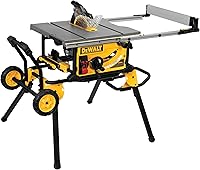
DeWalt DWE7491RS vs Bosch GTS15-10 Table Saw: Which Is Better? (October 2026)
Both are 10-inch, 15 amp saws on wheeled stands with rip capacities a fraction of an inch apart, so the stand, the warranty and how you move the saw decide most of the choice. Pick the DeWalt for the folding rolling stand and the 3-year warranty, and pick the Bosch for a stand that lifts for moving.
On this page (15 sections)
- DeWalt vs Bosch table saw: the core specs
- The stands: rolling vs lifting
- Fence and guarding
- Brakes and soft start
- Warranty and what it covers
- Weight, footprint and where each saw lives
- How we scored the two saws
- Who should buy the DeWalt DWE7491RS
- Who should buy the Bosch GTS15-10
- Setup in the first hour
- Blade teeth and finish
- Space and where each saw suits
- Who should look at a different saw
- The two saws in one table
- DeWalt or Bosch: the short answer
DeWalt's DWE7491RS and Bosch's GTS15-10 are two 10-inch jobsite table saws in the same size and power class. Both have a 15 amp motor, both have a rip capacity a little over 32 inches, and both come on a wheeled stand.
This page compares the two on rip capacity, blade speed, the stand, guarding, brakes, warranty and how each one moves, so you can pick the one that fits your shop.
 Best for the wider rip in this pair
DEWALT DWE7491RS 10-Inch Table Saw With Stand
 Best for a stand that lifts for moving
BOSCH GTS15-10 10-Inch Jobsite Table Saw With Rise Stand
DeWalt vs Bosch table saw: the core specs
The two saws are close on the core numbers. The DeWalt has a 32-1/2 inch rip capacity, and the Bosch has a 32-1/8 inch rip capacity.
Both have a 10-inch blade and a 15 amp motor. The gap in rip width is too small to decide the choice on its own, so look at the stand and the warranty next.
The DeWalt runs at 4,800 rpm and the Bosch at 3,800 rpm. Blade speed matters less than the blade you pick for the job, so don't choose a saw on rpm alone.
How the DeWalt and Bosch table saws compare on rip
Both saws rip wide stock on a fixed bench or stand. The DeWalt's extra 3/8 inch of rip is real but small.
For most shop jobs, the two saws cover the same boards.
If you rip a board wider than 32 inches, neither saw does it in one pass. Plan the cut another way before you buy, and check the manual for the methods it allows.
The stands: rolling vs lifting
The DeWalt has a foldable rolling stand, and the Bosch has a gravity-rise stand that lifts with a foot pedal. The stand is where the two saws differ most.
DeWalt says its rolling stand sets up and breaks down easily, with wheels for moving the saw. The stand folds, which helps when the saw has to fit in a corner.
Bosch's GTA50W stand has 8-inch treaded tires and a foot release pedal. Bosch says the stand is built for jobsite use, and the pedal lets you lift the saw for moving or lower it into place.
Fence and guarding
Both saws use a rack and pinion fence, so the fence setup is similar. The guard systems differ in how they're built and adjusted.
The DeWalt has a rack and pinion telescoping fence, and its guarding adjusts without tools. The riving knife, guard assembly, wrenches and push stick store on the saw.
The Bosch has a rack and pinion rip fence with color-coded index pins. Its Smart Guard System includes a three-position adjustable riving knife, anti-kickback pawls and a barrier guard.
Check the riving knife on either saw before the first cut. The riving knife should line up with the blade, and the guard should move freely, as each manual describes.
Brakes and soft start
Bosch lists a convenience brake and soft-start circuitry. Bosch says its brake stops the blade in about three seconds, and the soft start manages the motor's start-up.
DeWalt lists a brake among the saw's features. It doesn't give a stopping time, so check the manual for how the brake works on the saw you buy.
A brake helps the blade stop sooner after you switch off. It doesn't replace the guard or the rules in the manual, so use both on either saw.
Warranty and what it covers
DeWalt gives the DWE7491RS a 3-year limited warranty. Bosch gives the GTS15-10 a 1-year limited warranty.
A longer warranty gives you more time to make a claim if the saw fails early. Keep the receipt and the model number, and read what the warranty covers before you buy.
Weight, footprint and where each saw lives
The DeWalt weighs about 110 pounds with its stand, and the Bosch weighs about 103 pounds with its stand. Both are heavy, so each needs a fixed spot.
The DeWalt's footprint is about 31 by 24 inches. Plan the space for the longest board you rip, not just for the saw.
Measure the doorway and the path to the spot before you move either saw in. A saw that won't fit through the door is a common setup mistake, and it's easy to check before delivery.
How we scored the two saws
Our score weighs specs, features and buyer feedback against what you're shopping for. On that basis, the DeWalt scores 8.6 and the Bosch scores 7.9.
The DeWalt's score comes from the wider rip, the folding stand and the longer warranty. The Bosch's score reflects its lifting stand and brake, with a shorter warranty and a heavier stand pulling it down.
Who should buy the DeWalt DWE7491RS
Buy the DeWalt if you want the widest rip in this pair and a stand that folds for storage. It suits a garage bay or shop that stays set up and rips wide lumber, trim and sheet goods.
The 3-year warranty is a real advantage if you want more time to make a claim. Pair it with a good bench or stand, since the saw depends on a stable base.
Who should buy the Bosch GTS15-10
Buy the Bosch if you move the saw often and like a stand that lifts with a foot pedal. It suits a jobsite-style setup where the saw gets wheeled from one spot to another.
The convenience brake and soft start are useful if you switch between a few spots a week. Accept the shorter warranty if the stand matters more to you.
Setup in the first hour
Set the stand level and stable, and check the saw's height on the stand before the first cut. Make sure the DeWalt's stand locks in the open position, as its manual directs.
Check the fence against the blade and the riving knife's alignment against the blade. Both steps follow the manual, and both affect the cut from the first board.
Blade teeth and finish
The DeWalt's blade has 24 teeth, and the Bosch's has 50. Tooth count changes the cut more than rpm does.
More teeth give a finer cut and a slower feed, while fewer teeth clear wood faster. Pick the blade for the material and the finish you need, not for the saw's rpm.
Either saw can take a different blade later, but check the size and arbor before you buy one. The best table saw blades roundup compares blade types for home shops.
Space and where each saw suits
The DeWalt suits a shop with a fixed spot and room for its stand. The Bosch suits a shop that moves the saw, since its stand lifts for moving.
Both saws are heavy and need a flat floor, so measure the spot and the path before you buy. Wide boards also need room on both sides of the saw, not just at the front.
Who should look at a different saw
Neither of these two saws is a compact choice, since both are 10-inch saws on stands. For a smaller shop, the DeWalt DWE7485 review covers a saw with a smaller footprint.
For a saw that stores more easily, the SKIL TS6307 is the one to compare. SKIL TS6307 vs DeWalt DWE7485 explains the trade-off.
The two saws in one table
Here are the DeWalt and the Bosch from this comparison, with the features and specs that matter most for the choice.
| Product | Best for | Blade size | Motor | Main cut | Our score |
|---|---|---|---|---|---|
| DEWALT DWE7491RS 10-Inch Table Saw With Stand | the wider rip in this pair | 10 in | 15 amp | 32-1/2 in rip capacity | 8.6 |
| BOSCH GTS15-10 10-Inch Jobsite Table Saw With Rise Stand | a stand that lifts for moving | 10 in | 15 amp | 32-1/8 in rip capacity | 7.9 |
The DeWalt is the saw with the folding rolling stand, and the Bosch is the saw with the lifting stand. Each badge names the setup that saw suits best.
DeWalt or Bosch: the short answer
Between a DeWalt and a Bosch, the stand and the warranty decide most of the choice. The rip width is close enough to matter less.
Pick the DeWalt DWE7491RS for the wider rip, the folding stand and the 3-year warranty. Pick the Bosch GTS15-10 for the lifting stand, the brake and the soft start.
For the full profile of the DeWalt, read the DeWalt DWE7491RS review. If the saw has to fit a smaller room, the DeWalt DWE7485 review covers a compact option, and benchtop vs jobsite table saw explains the size tiers.
Frequently asked questions
Is the DeWalt DWE7491RS better than the Bosch GTS15-10?
Not for every shop, since the DeWalt has the wider rip, a folding stand and a 3-year warranty, while the Bosch has a lifting stand, a convenience brake and soft start. Match the saw to how you'll move it and where it sits.
Which one has the bigger rip capacity?
The DeWalt, at 32-1/2 inches, against the Bosch's 32-1/8 inches. The gap is small, so the stand, the warranty and how you move the saw usually matter more to the choice.
Do both saws come with a stand?
Yes, both come on a wheeled stand, so you don't need to buy one separately. Check that the stand is level and stable before each cut, as the manual directs.