Do You Need an Outfeed Table for a Portable Saw?
Yes, when a board runs past the back of a portable saw, because the saw's small table can't hold the far end. Without support, a long board sags or tips and pulls off the fence, so a roller stand or outfeed table helps keep it level.
On this page (8 sections)
- What an outfeed table does for a table saw
- When a portable saw needs an outfeed table
- Roller stands or a full outfeed table
- Setting the height of your outfeed support
- Safety points for outfeed support
- Do you need one if you only cut short boards?
- Outfeed support for a full sheet of plywood
- Is a table saw outfeed table worth the setup?
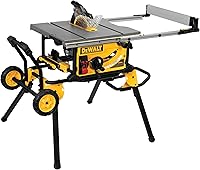
A portable table saw needs an outfeed table when you rip or crosscut boards that run past the back of the saw. The saw's own top is small, so the far end of a long board can sag, tip or drag, and that pulls the work off line.
If your boards are short, or most of your cuts are small parts, you can skip the extra support. For long boards, a roller stand or outfeed table is the usual fix.
What an outfeed table does for a table saw
An outfeed table holds the back half of a board as it leaves the blade. It sits at the same height as the saw top, so the board stays flat and can ride against the fence.
Support matters most on long rips, such as a 4x8 sheet of plywood cut down the middle. Without it, the far end drops and the board shifts during the cut.
Table saw outfeed table use on a small saw
The saw's top gives you a short run of flat surface. A table saw outfeed table adds the length you need on the back side, so the board has a flat landing.
When a portable saw needs an outfeed table
Most portable saws ship with a small table, so any cut that runs past the back edge needs help. That includes long rips on sheet goods, trim cut to length and fence-guided cuts on 8-foot boards.
A helper isn't a substitute for a stand, since a helper can change how the board moves. Many manuals warn against anyone pulling or steering a board during a cut, so check yours.
Roller stands or a full outfeed table
Roller stands are the most common choice for a portable saw. They fold away, adjust in height and take less room than a built-in table.
A full outfeed table is sturdier and gives you more flat surface. It also takes more room and more time to set up, so it suits a shop that stays in one spot.
Three roller stands show the range you'll see. Each one folds, and each one adjusts in height.
Setting the height of your outfeed support
The roller should sit at the same height as the saw top. When the height matches, the board slides across both surfaces without lifting or dipping.
Table saw outfeed table height
Most stands adjust in small steps, so set them with a straightedge laid across the saw top and the roller. Check it at both ends, since a stand that's set unevenly tips the board to one side.
Your saw's manual may name a height for its support. Follow that first, then fine-tune with the straightedge.
Safety points for outfeed support
Keep the blade guard, riving knife and anti-kickback pawls in place as the maker's manual says.
A roller stand supports the board, but it doesn't guide it. Keep the board against the fence the whole way through.
Stand where the manual says, and stay out of the line of the cut. If a board kicks back, it can travel along that line.
Use a push stick when the cut gets narrow, as the manual shows. Never use the roller stand to push a board into the blade.
The maker's manual is the final word on your saw. If it says something different from this page, follow the manual.
Do you need one if you only cut short boards?
Probably not, if your boards fit on the saw top with room to spare. A 2-foot piece of trim doesn't need a stand, since its far end never leaves the table.
The need goes up with board length. A 6-foot board that you rip down the middle needs support at the back, even if the saw is a good fit for the job otherwise.
If you cut both short and long stock, keep one foldable stand around and use it only for the long cuts.
Outfeed support for a full sheet of plywood
A full 4x8 sheet is heavy and awkward for one person to hold. A roller stand on the back side takes the weight of the far end, so the sheet stays level through the cut.
Plan the sheet's path before you start. Clear the area on both sides, set the stand at the same height as the saw top and check that the stand's feet sit firm.
A second person can help you carry a heavy sheet to the saw. Check the manual before anyone helps during a cut, and keep everyone out of the blade's line.
Is a table saw outfeed table worth the setup?
Yes, if you rip long boards often. The stand takes a few minutes to fold out, and it keeps the board steady at the point where most board drift starts.
For occasional short cuts that stay on the saw table, you may not need extra support. Either way, check the manual before the first cut.
For the stand itself, see the table saw stand guide. To plan the back of your bench, read table saw dust collection, and for the bigger picture of portable saws, start with the portable table saw guide.
Frequently asked questions
Do you need an outfeed table for a portable table saw?
Not always. You need support when a board runs past the saw's table, but short boards that fit on the table usually don't need extra help.
How high should a table saw outfeed table be?
Set it to the same height as the saw table, so the board slides across both without lifting. Check the maker's manual, since some makers give a height for their saw.
Can a roller stand replace an outfeed table?
For many jobs, yes, since a roller stand supports a long board and folds away when you're done. A full outfeed table is sturdier, but it takes more room and setup.
Is a helper enough instead of a stand?
No, because a stand supports the far end without anyone standing at the blade, and a helper can change how the board moves. Many manuals warn against anyone pulling or steering a board during a cut, so check yours.