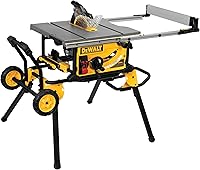
Portable Table Saws for Home Workshops: Complete Guide
A portable table saw is a table saw you can move, usually on a folding or wheeled stand, and it suits most home workshops that rip boards and sheet goods. It trades some stability and cut capacity for the ability to store it between jobs.
On this page (14 sections)
- What a portable table saw does
- Who a portable table saw suits
- Portable, jobsite and compact saws
- What to check before you buy
- Stands, support and setup
- Blades and accessories
- Dust collection
- Safe use of a portable table saw
- Portable saws compared with other saws
- Picks for each type of shop
- Single-model reviews
- Buying guides
- Every guide on this site
- Where to start with a portable table saw
A portable table saw is a table saw you can move, usually on a folding or wheeled stand, and it suits most home workshops that rip boards and sheet goods. It trades some stability and cut capacity for the ability to store it between jobs.
This guide covers what a portable saw does, which type fits which shop, and what to check before you buy. It also covers the stands, blades, dust gear and safe-use basics that go with the saw.
Use it as the starting point. Each section links to a deeper guide, so you can go as far as you need.
What a portable table saw does
A portable table saw cuts wood with a blade that rises through a flat table. A rip fence guides the board, so you can make long, straight cuts.
It handles long rips that are hard to keep straight with a circular saw. That's why many DIY projects that need straight, repeatable cuts start with a table saw.
For the basic definition and the parts of a table saw, read what a table saw is.
Who a portable table saw suits
A portable table saw suits a home shop that rips plywood, trim and boards for shelves, furniture and simple builds. It also suits a garage, a basement or a spare room that needs to hold a saw part of the time.
It's a good match for a shop with limited floor space. The saw folds, rolls or sits on a bench, so you can clear the space when you're done.
It's a weaker match for short cuts only, or for daily production work. A miter saw handles short crosscuts with less setup, and a heavy cabinet saw holds up better under steady use.
Portable, jobsite and compact saws
Portable saws come in three working types, and the names overlap. A jobsite saw is a portable saw with a stand, a compact saw has an 8-1/4 inch blade, and a benchtop saw sits on a bench.
Jobsite saws are the most common pick for a home shop. They take a 10-inch blade, a stand and a rip capacity that covers most home projects.
Portable table saw types compared
Compact saws are lighter and take less room, with a smaller blade and a shorter rip capacity. Benchtop saws are the lightest, but they usually have the smallest motors and rip capacities.
Benchtop vs jobsite vs cabinet table saws compares the three types side by side, and it's the next read if you're still undecided.
What to check before you buy
Start with rip capacity. For 4x8 sheets, plan on at least 24 inches, and wider boards are easier with 25 inches or more.
Check the stand next. A folding stand stores flat, a wheeled stand rolls to the work and a bench-mounted saw needs a sturdy bench you own.
Then check the weight, the blade size, the guards and the riving knife in the box. The manual explains what each part does, and it's the final word on the saw.
Our three starter picks show the range of portable saws. Each one suits a different floor plan, so read the card for your space before you choose.
Stands, support and setup
Set the stand on a level, firm floor before you cut. A saw that rocks on its stand can shift during a cut, so the stand matters as much as the motor.
Long boards need support on the back side. A roller stand or outfeed table keeps the far end steady, and the outfeed table guide shows when you need one and how to set the height.
For the stands themselves, see the table saw stand guide. It covers the folding, wheeled and rolling options that fit a portable saw.
Blades and accessories
Blades are the part you'll change most often. Check the blade size the saw takes, and check the manual for any dado limits before you buy a dado set.
A dado blade cuts wide grooves, but not every portable saw takes one. The dado blade guide explains what to check first.
Sleds, push sticks and blades add to what the saw can do. The table saw sled guide covers when a sled helps, and the push stick guide covers the pushers the manual describes.
For the blade itself, the best table saw blades guide covers the common choices. Pick the blade for the cuts you make, not the one with the most teeth.
The blade direction guide shows which way the blade turns, and how to change a table saw blade walks through the change with the saw unplugged.
Dust collection
Most portable saws have one dust port, so check the port size before you buy a bag or a hose. A shop vac works with the right adapter.
The table saw dust collection guide covers the common ports, hoses and bags. It also covers what to wear when you cut, as the manual advises.
Safe use of a portable table saw
Read the maker's manual before the first cut. It covers the guard, the riving knife, the anti-kickback pawls and the blade setup for your saw.
Kickback is the risk to plan around. Use push sticks for narrow cuts, stand where the manual says and never reach over a spinning blade.
The table saw kickback guide explains what the manual says about it, and how to use a table saw walks through the basics for a beginner.
Portable saws compared with other saws
A portable table saw and a circular saw both cut wood, but they do different jobs. A table saw gives you a fence for long, repeatable rips, and a circular saw suits work in place.
The table saw vs circular saw guide compares the two. For short crosscuts, the table saw vs miter saw guide shows where a miter saw does better.
A track saw is a third option for long rips in place. The table saw vs track saw guide explains when each one fits a home project.
For brand and model matchups, see DeWalt vs Bosch table saws and SKIL vs DeWalt table saws.
Picks for each type of shop
Our roundups rank the portable saws by score, with a short reason for each pick. Start with the roundup that matches your floor space.
- Best portable table saws for a home workshop covers the general range.
- Best jobsite table saws for DIY homeowners covers the stand-based saws.
- Best compact table saws for small shops covers the 8-1/4 inch models.
- Best table saws for beginners covers the simpler first saws.
- Best table saws for home use covers the general home shop.
Single-model reviews
When one model fits your shop, a single review gives you the detail. Each review covers the specs, the stand and the trade-offs for that saw.
- SKIL TS6307 review covers the folding-stand jobsite saw.
- DeWalt DWE7485 review covers the compact 8-1/4 inch saw.
- DeWalt DWE7491RS review covers the 10-inch saw with a rolling stand.
- Evolution R10TS review covers the 10-inch saw with a dado plate.
Buying guides
Two guides help you narrow the choice before you pick a saw. Start with the one that matches how far along you are.
- How to choose a table saw for a home workshop walks through the checklist from boards to stand to weight.
- Are portable table saws worth it for a home shop? weighs the trade-offs against other tools.
Every guide on this site
Here's the full map, grouped by category. Each link goes to one post, and the related guides sit close together.
Portable and jobsite saws:
- Best portable table saws for home workshops
- Best jobsite table saws for DIY homeowners
- Best compact table saws for small shops
- Best table saws for beginners
- Best table saws for home use
- Are portable table saws worth it for a home shop?
- SKIL TS6307 review
- DeWalt DWE7485 review
- DeWalt DWE7491RS review
- Evolution R10TS review
Comparisons:
- Table saw vs circular saw
- Table saw vs miter saw
- Table saw vs track saw
- DeWalt vs Bosch table saws
- SKIL table saw vs DeWalt
- Benchtop vs jobsite vs cabinet table saws
Stands and setup:
- Best table saw stands for portable saws
- Table saw outfeed table: do you need one?
- Table saw dust collection: ports, hoses and shop vacs
Blades and accessories:
- Which way a table saw blade goes on
- How to change a table saw blade
- What a dado blade is and whether your saw can use one
- What a table saw sled is and whether you need one
- Best table saw blades for home woodworking
- Best table saw push sticks and push blocks
Beginner guides and safety:
- What is a table saw and what is it used for?
- How to use a table saw: a beginner walkthrough
- Table saw kickback: what it is and what the manual says
- How to choose a table saw for a home workshop
Where to start with a portable table saw
Start with the roundup that matches your floor space, then read the one buying guide that fits where you are. Measure the spot first, since fit decides more than any single spec.
Read the maker's manual for your saw before you buy or cut. The manual is the final word on blade sizes, dado limits and safe setup.
Frequently asked questions
What is a portable table saw?
A portable table saw is a table saw you can move, usually with a folding or wheeled stand. It has a rip fence and a blade, and it suits home projects that need long, straight cuts.
Is a portable table saw good for a home workshop?
Yes, for most home workshops that rip boards and sheet goods. It moves between spots and stores away, though it has a smaller table and less stability than a heavy saw.
What size blade does a portable table saw take?
Most portable saws take a 10-inch blade, and compact models take an 8-1/4 inch blade. Check the manual for the blade sizes your saw accepts, and for any dado limits.
Do you need a stand for a portable table saw?
Most portable saws need a bench or a stand. Some include one, and others need a bench you own or a stand you add, so check the box before you buy.
How do you use a portable table saw safely?
Read the maker's manual before the first cut, and keep the blade guard, riving knife and anti-kickback pawls in place. Use push sticks for narrow cuts, stand where the manual says and unplug the saw before a blade change.