Benchtop vs Jobsite vs Cabinet Table Saws: Which Type?
A benchtop table saw suits a small bench and light stock, a jobsite saw suits a home shop that moves the saw, and a cabinet saw suits a dedicated shop that cuts all day. Most DIY homeowners land on a jobsite saw, because it rips boards and still moves between spots.
On this page (17 sections)
- What a benchtop table saw is
- What a jobsite table saw is
- What a cabinet table saw is
- Size, weight and floor space compared
- Power and cut capacity
- Setup, moving and storage
- Cost and what you get for it
- Safety across all three types
- Which type fits which home shop
- Accessories you'll need for each type
- Noise and hearing protection
- How the type changes your daily routine
- Who each type suits by project
- Setup time and first-week use
- Storage, dust and power in each type
- Stand, bench and floor: what each type needs under it
- Benchtop or jobsite? The answer for most home shops
A benchtop table saw suits a small bench and light stock, a jobsite saw suits a home shop that moves the saw, and a cabinet saw suits a dedicated shop that cuts all day. Most DIY homeowners land on a jobsite saw, because it rips boards and still moves between spots.
All three types cut wood on a flat table with a blade and a fence. They differ in weight, power and setup, and those three differences decide where each one fits.
This guide compares the three types on size, power, setup, cost and safety. Use it to narrow the type, then read how to choose a table saw for the rest of the checklist.
What a benchtop table saw is
A benchtop saw is a small saw that sits on a bench or a table. It's the lightest of the three, and it's the easiest to store on a shelf or in a closet.
Benchtop saws usually have smaller blades and motors than jobsite or cabinet models. That's fine for small stock, but it limits how wide a sheet you can rip.
What a jobsite table saw is
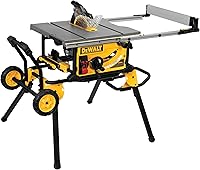
A jobsite saw is a portable table saw with a stand, folding legs or wheels. It's built to move between the garage, the driveway and the shop, which is why DIY homeowners often pick one.
Jobsite saws usually take a 10-inch blade and have a 15-amp motor. They're heavier than benchtop saws, but a stand makes them easier to set up and store than a cabinet saw.
What a cabinet table saw is
A cabinet saw is a heavy, stationary saw with a bigger motor, a larger table and a cabinet base. It stays in one place once it's set up.
Cabinet saws suit a dedicated shop that cuts every day. They need more floor space and a plan for power, so they're a poor fit for a shared garage.
Size, weight and floor space compared
Benchtop saws are the smallest and lightest, so they fit a shelf, a bench or a closet. They need the least floor space and the least muscle to move.
Jobsite saws sit between the two. They need room for the stand and room at the back for long boards, but they fold or roll out of the way when you're done.
Cabinet saws need the most room and the most help to move. They suit a shop where the saw stays put and the floor plan is set.
Power and cut capacity
Motor size and rip capacity change what each type can cut. Benchtop saws usually have the smallest motors and the shortest rip capacities, while cabinet saws have the most power and the widest tables.
Jobsite saws fall in the middle. A 15-amp motor and a 25 to 32 inch rip capacity cover most home projects, including sheet goods and wide trim.
Check the rip capacity against your widest board before you buy. A saw that can't rip your sheets will frustrate you, however small or cheap it is.
Benchtop vs jobsite table saw for a garage
A garage suits a jobsite saw better than a benchtop model in most cases. The stand gives the saw a working height and a place to rest, and a jobsite saw rips the widest boards.
A benchtop saw works in a garage too, but it needs a sturdy bench and a plan for long boards. If the bench is strong and the boards are short, a benchtop saw can do the job.
Setup, moving and storage
Benchtop saws are the easiest to set up. You place them on a bench, level them and check the guard before the first cut.
Jobsite saws need a stand set up and locked before every cut. Folding stands store flat, and wheeled stands roll the saw to the work and need a level, firm floor.
Cabinet saws need a dedicated spot and often a helper for the move. Plan the floor, the power supply and the path before the saw arrives.
Cost and what you get for it
Benchtop saws sit at the lower end of the budget range. They suit a first saw on a tight budget or a small project list.
Jobsite saws cover the middle of the range, with more rip capacity and a stand. Cabinet saws sit at the top of the range, with heavier builds and more power.
Match the spend to the work. A saw that costs more but can't rip your sheets is still the wrong saw.
Safety across all three types
Every table saw needs its guard, riving knife and anti-kickback pawls in place. The maker's manual explains how each part works, and that's the first thing to read on any type.
Kickback can happen on any table saw, so stand where the manual says and use push sticks for narrow cuts. The table saw kickback guide covers what the manual says about it.
Don't use a saw for a cut its manual doesn't allow. Check the blade sizes, the dado limits and the stand setup before you cut, and unplug the saw before you change a blade.
Which type fits which home shop
A small apartment or a shared closet suits a benchtop saw. It stores on a shelf and cuts small stock on a bench you already own.
A garage or a basement suits a jobsite saw. It rolls or folds out of the way, and it rips the sheets and wide boards most DIY projects need.
A dedicated shop that cuts every day suits a cabinet saw. It has the floor, power and set-up time that a heavy saw needs.
Accessories you'll need for each type
Every type needs a blade that matches its size, push sticks and a dust port adapter. Check the manual for the blade size and the port size before you buy.
A benchtop saw also needs a sturdy bench, and it may need outfeed support for long boards. A jobsite saw needs its stand and the same outfeed support for long stock.
A cabinet saw often needs a dust collector and outfeed tables sized to its table. Plan those extras with the saw, since they add to the setup.
Noise and hearing protection
Table saws are loud, and the motor and blade both add to the noise. Wear hearing protection with any type, because the noise is hard on the ears over a long session.
How the type changes your daily routine
The type shapes your routine more than the spec sheet does. Think about how often you'll move the saw, how often you'll change the blade and how much cleanup each session needs.
A benchtop saw is quick to take out and put away. That suits a shop where the saw comes off the shelf for a weekend project and goes back afterward.
A jobsite saw adds a stand to the routine. Setup and teardown take a few more minutes, but the saw stays steady at a working height once it's locked.
A cabinet saw stays in place, so the routine is about the work. Blade changes and dust cleanup happen at a fixed station, and the saw is ready the moment you power it on.
Who each type suits by project
Think about the projects on your list before you pick a type. A list of shelves, boxes and small furniture suits a benchtop saw or a small jobsite saw.
Sheet goods and wide trim point to a jobsite saw or a cabinet saw. Those cuts need the rip capacity and the table length to handle a full board.
Daily cutting in a busy shop points to a cabinet saw. That's the type built to run all day in one spot, with the power and table size that steady use needs.
Mixing projects is common in home shops. If you build both shelves and sheet goods, a jobsite saw covers the widest range in the least space.
Setup time and first-week use
A benchtop saw takes the least time to set up. Place it on the bench, level it and check the guard before the first cut.
A jobsite saw takes longer, since the stand has to be set up and locked. Make the stand part of your first-week routine, and check the locks before every session.
A cabinet saw needs the most setup. It needs a dedicated spot, a proper power supply and often a helper, so give the first install extra time.
Storage, dust and power in each type
Benchtop saws store on a shelf or in a closet, and they need a clean bench and a dust bag or hose. Jobsite saws fold or roll out of the way, but they still need a dust port and a clear path for long boards.
Cabinet saws need a fixed spot with room around them for long stock and for dust collection. Pair the saw with a dust collector sized for its port, and follow the manual's guidance on hookups.
Every type needs a grounded outlet and a cord the manual allows. Ask a licensed electrician if you're unsure about the outlet or the circuit, and don't run the saw from an extension cord the manual doesn't allow.
Stand, bench and floor: what each type needs under it
A benchtop saw needs a sturdy bench that stays put under load. A wobbly bench moves the saw during a cut, so check the bench before the saw goes on it.
A jobsite saw needs a level, firm floor for its stand. The stand's feet and wheels should sit flat, and the locks should engage before you turn the saw on.
A cabinet saw needs a floor that can carry its weight, along with a level base. Check the floor and the base before the first use, since a heavy saw that shifts is a hazard.
Benchtop or jobsite? The answer for most home shops
For most home shops, a jobsite saw is the better pick. It rips wider boards, has a stand and still moves between spots.
Pick a benchtop saw if your space is tight, your boards are short and your bench is sturdy. Pick a cabinet saw only if you cut every day and have the room and power for a heavy machine.
For the specific models, see the best jobsite table saws. For the portable range, the portable table saw guide covers stands, blades and safe use.
Frequently asked questions
What is the difference between a benchtop and a jobsite table saw?
A benchtop saw sits on a bench and is lighter, with a smaller motor and a shorter rip capacity. A jobsite saw has a stand or folding legs, so it moves between spots and usually rips wider boards.
Is a benchtop table saw enough for home projects?
For small projects and light stock, it can be. Check the rip capacity and motor against your widest boards before you commit, since a small saw limits how wide a sheet you can rip.
Is a cabinet table saw worth it for a home shop?
Usually not, unless you cut every day and have the space and power for a heavy saw. For most home shops, a jobsite saw covers the work with less floor space.
Can a benchtop saw be set up like a jobsite saw?
Some benchtop saws can sit on a stand, but they don't come with the folding legs or wheels of a jobsite model. Check the stand options and the weight before you buy.