Table Saw vs Track Saw for Home Projects: Which Is Better? (October 2026)
A table saw is best for repeat rips at a fixed bench, and a track saw is best for long, straight cuts in sheet goods on the floor. Pick the one that fits the space and the sheets you cut most.
On this page (13 sections)
- Table saw vs track saw: where the cut happens
- Where a track saw wins
- Where a table saw wins
- Space, weight and portability
- Safety differences
- Which one fits a home project?
- What you need beyond the saw
- Setting up a track cut
- Blade size and depth on a track saw
- Plunge cuts and cutouts
- Common mistakes with each tool
- The two saws side by side
- Choosing a table saw or a track saw for home projects
A table saw and a track saw both cut sheet goods and long boards, but they work in different places. A table saw is a fixed bench tool with a fence, and a track saw is a circular saw that rides a guide rail.
This page compares the two for home projects, on the cuts they make, the space they need, safety and which one to buy first. It's written for a shop that cuts plywood, shelving and furniture parts.
 Best for wide rips on a fixed shop floor
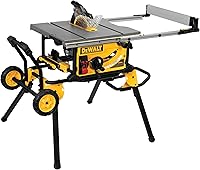
DEWALT DWE7491RS 10-Inch Table Saw With Stand
 Best for plunge cuts on a budget
WEN CT1065 6.5-Inch Plunge Cut Track Saw
Table saw vs track saw: where the cut happens
A table saw brings the wood to a blade that stays fixed. A track saw takes the blade to the wood, along a guide rail you clamp to the sheet.
That difference decides most of the choice. If the sheet can go to a bench, a table saw is the natural tool.
If the sheet is too big to move, a track saw goes to it.
Where a track saw wins
A track saw wins on sheet goods you can't lift onto a table. You lay the sheet on the floor or across sawhorses, clamp the rail, and cut along it.
A track saw also makes plunge cuts, which start in the middle of a panel. That's useful for cutouts, such as an opening in a cabinet side, when a table saw can't reach the spot.
The WEN CT1065 is a plunge cut circular track saw. It runs on a WEN guide track, and the saw's box includes a 6.5-inch 24-tooth carbide blade, while the track is a separate purchase.
Where a table saw wins
A table saw wins on repeat rips at one setting. Set the fence, check the setting with a tape and cut board after board to the same width.
The DEWALT DWE7491RS adds a 32-1/2 inch rip capacity, which is the distance from the blade to the fence. That's the widest rip in this pair, and it suits sheet goods and wide boards that the stand can hold.
A table saw also takes a dado blade, a stacked set that cuts grooves, if the saw accepts one. A track saw can't cut a groove that way.
Read table saw dado blade before you buy a dado set for a saw.
Table saw vs track saw for sheet goods
A full 4x8 sheet is heavy and awkward on a table saw, even one with a wide rip. You'll need support on both ends, and room to walk the sheet past the blade.
A track saw cuts the sheet where it lies, which avoids that lift. The trade-off is accuracy, which depends on a clamped track and a steady cut.
Accuracy and setup
A table saw's accuracy depends on the fence and the blade alignment. A track saw's accuracy depends on the rail being clamped and the saw following it.
Both need setup time. A table saw needs its fence squared and its blade aligned.
A track saw needs the rail clamped square to the cut line and the saw kept against it.
Space, weight and portability
A track saw is easy to carry and needs only a flat floor and a clamp. A table saw needs a bench or a stand, and the DWE7491RS, with its stand, weighs about 110 pounds.
If the shop is small and you move the work around it, a track saw fits the space better. If the work stays at one bench, a table saw is the better use of the room.
Safety differences
Both tools can cause serious injury, and both need the manual's setup before the first cut. Neither is safe to use without reading its instructions.
On a table saw, use the guard and riving knife the way the manual directs, and use a push stick for narrow pieces. Table saw kickback covers what the manual says about kickback.
On a track saw, keep the rail clamped down before you cut, and keep the saw's guard working. Keep the cord clear of the cut line, and wear eye and ear protection on either tool.
Which one fits a home project?
Pick a track saw if your sheets are too big to move, you cut plywood on the floor or sawhorses, or you need plunge cuts in the middle of a panel. A track saw suits a shop that works on site or in a garage with little room for a bench.
Pick a table saw if you rip a lot of solid stock or plywood to a set width, and you have a fixed spot with room for a stand. The DWE7491RS suits a bay with floor space and a fixed layout.
Some cabinet builders use a track saw for the big sheets and a table saw for the smaller rips. You don't need both on day one, and the first tool should match the work you already plan to do.
What you need beyond the saw
A track saw needs a guide track and clamps, while a table saw needs a stable bench, a stand and support for the work. The track is the part people often forget to plan for.
The WEN CT1065 runs on a WEN guide track, and the track is a separate purchase. Clamps hold the track to the sheet, so plan for them as part of the setup.
A table saw needs a flat, stable bench or stand, plus outfeed support for long boards. The portable table saw guide covers the stands and supports that suit portable saws.
Setting up a track cut
A clean track cut starts with a square mark and a clamped rail. The manual's alignment steps come next, and they matter more than the speed of the cut.
Mark the cut line on the sheet, line up the rail's guide edge with that line, and clamp the rail so it can't move. Check that the saw's base sits against the rail before you start.
The track saw's own manual sets the alignment method for its rail. Follow it before the first cut, and keep the cord clear of the cut line.
Blade size and depth on a track saw
The WEN CT1065 takes a 6.5-inch blade, and its box includes a 24-tooth carbide-tipped blade. Its bevel setting cuts boards up to 1-5/8 inches thick at 45 degrees.
The saw's rip thickness is 2-1/3 inches, so thicker stock needs a different tool or a different approach. Check the thickness of your sheets and boards before you buy.
Plunge cuts and cutouts
A plunge cut starts in the middle of a panel, which suits cabinet openings and cutouts that a table saw doesn't reach. The blade enters the wood from the top, so you don't need a starting edge.
Plunge cuts need a steady hand, a firm guide and the manual's plunge instructions. Read those before you try one on a real panel.
Common mistakes with each tool
A rail that shifts during a track cut throws the line off. A fence that isn't parallel to the table saw blade makes a board bind.
Check both before the power is on, and keep the guard and riving knife set up as the manual directs on the table saw.
The two saws side by side
Here are the table saw and the track saw from this comparison, with the features and specs that matter most for the choice.
| Product | Best for | Blade size | Motor | Main cut | Our score |
|---|---|---|---|---|---|
| DEWALT DWE7491RS 10-Inch Table Saw With Stand | wide rips on a fixed shop floor | 10 in | 15 amp | 32-1/2 in rip capacity | 8.6 |
| WEN CT1065 6.5-Inch Plunge Cut Track Saw | plunge cuts on a budget | 6.5 in | 10 amp | 2-1/3 in rip thickness | 7.2 |
The DWE7491RS is the table saw in this pair, and the WEN CT1065 is the track saw. Each badge names the kind of work the saw handles best.
Choosing a table saw or a track saw for home projects
Choose a table saw for repeat rips at a fixed bench, and choose a track saw for long straight cuts in sheets you can't move. Your sheet size and your space decide most of it.
If you're comparing with a handheld option, table saw vs circular saw covers the circular saw. If a miter saw is also on your list, table saw vs miter saw covers that comparison.
For a beginner's overview of the table saw, read what a table saw is.
Frequently asked questions
Is a track saw more accurate than a table saw?
Neither is more accurate by default, since a track saw depends on a clamped track and a steady cut, and a table saw depends on its fence and blade alignment. Check the manual for the setup method before a batch of cuts.
Can a track saw replace a table saw?
For sheet goods on the floor, often yes. A track saw can't match a table saw for repeat rips at one setting, though, and it can't use a fence the way a table saw does.
Which is better for cabinets?
A track saw suits cabinet panels you can't carry to a bench, while a table saw suits repeat rips of solid stock. Some cabinet builders use a track saw for the big sheets and a table saw for the smaller rips.