What Is a Table Saw and What Is It Used For?
A table saw is a power saw with a round blade that sticks up through a flat table, and you feed the wood across the blade to make straight cuts. What it does best is ripping boards to width and making square crosscuts in a home workshop.
On this page (6 sections)
A table saw is a power saw built around a flat table. A round blade rises through a slot in the top, and you feed the wood across the blade to cut it.
That simple setup makes it one of the most useful tools in a home workshop.
This guide explains the main parts, the jobs a table saw does well and the safety basics that appear in most maker's manuals. It also points you to the posts where we go deeper.
The parts you'll use most
Five parts do most of the work: the blade, the table, the rip fence, the miter gauge and the guard system. Learn what each one does before you make your first cut.
What a table saw blade height controls
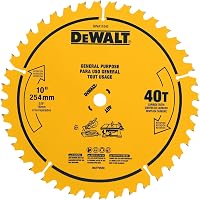
The blade is a round saw blade that sits under the table at rest and rises through it when the saw runs. A height control raises or lowers it, so you can set how far the teeth rise above the wood.
Most saws also tilt the blade for bevel cuts, which give an angled edge. Set the height and tilt only as the cut needs, and follow the manual when you change either one.
The rip fence and the miter gauge
The rip fence is a straight guide that runs parallel to the blade. You set it to the width you want, then feed the board along it, so the board keeps the same distance from the blade all the way through the cut.
The miter gauge slides in a slot in the table. It guides the wood across the blade for crosscuts and angled cuts.
Many people use a sled for square crosscuts, which we cover in table saw sled.
Guards, riving knives and anti-kickback parts
A blade guard covers the blade. A riving knife sits just behind the blade and keeps the cut from closing on the back of the teeth.
Anti-kickback pawls are small teeth that dig into the wood if it tries to move back toward you.
Not every saw has every part, and the parts that come with a saw differ by model. Keep the ones your saw has in place, and set them up the way the manual shows.
What a table saw is used for
A table saw is best at straight, repeatable cuts on flat stock. Most home jobs fall into four groups.
Ripping boards to width
Ripping means cutting a board along its length, with the grain. A table saw with a rip fence makes this its most common job, such as trimming a board from 6 inches to 5-1/2 inches.
The rip fence does the measuring for you once it's set. Check the setting with a tape before you cut, not after.
Crosscutting and angled cuts
Crosscutting cuts across a board, to shorten it or square an end. A miter gauge or a sled guides the wood for this kind of cut.
A bevel cut tilts the blade to give an angled edge, such as the edge of a shelf or a tabletop.
If you do a lot of crosscuts, a miter saw is often the faster tool. We compare the two in table saw vs miter saw.
Sheet goods and 4x8 plywood
A table saw can rip plywood and other sheet goods, but the rip capacity decides how wide a piece you can cut in one pass. The portable saws we cover range from about 24 to 32 inches of rip capacity, so check the number before you buy.
A full 4x8 sheet is heavy and awkward on a portable saw. Plan support on both ends before you start, and consider a cutting method the manual allows.
Grooves and dado cuts
A dado cut makes a flat-bottomed groove, and it needs a dado blade set. Not every saw accepts one, and the arbor length and the throat plate can rule out some sets.
Read the manual before you fit one, and see what a dado blade is for what to check.
Portable and jobsite table saws
A portable table saw is a lighter version built to move, often with a folding or rolling stand. Most sit on a stand or a bench, use a 10-inch or 8-1/4-inch blade and run from a standard household outlet.
The SKIL TS6307-00 is a good example of a jobsite saw with a stand built in. Its legs fold in to form the stand, and it has a 25-1/2 inch rip capacity.
SKIL vs DeWalt puts it beside a compact DeWalt.
The DEWALT DWE7485 is a compact 8-1/4-inch saw. It has a 24.5 inch rip capacity, which DeWalt says is enough to rip 4x8 sheet goods, and it's a fit for a small shop with limited floor space.
Portable saws give up some mass and capacity to gain portability. That's why the rip capacity and the stand matter more on a portable saw than on a heavy cabinet saw.
Our portable table saw guide and the best portable table saws list show how the models compare.
Safety basics from the maker's manual
Table saws are linked to serious hand and finger injuries, so read the manual before the first cut and follow it every time. The points below appear in most manuals, but your saw's manual is the final word.
Set up the guard and riving knife first
Install the blade guard and riving knife the way the manual shows before you switch on the saw. Check that the guard moves freely and that the riving knife lines up with the blade.
Don't run the saw with the guard or riving knife removed. If a cut seems to need them off, stop, because the manual decides which cuts are allowed and how.
Keep your hands clear and use a push stick
Keep your hands away from the blade's path, and never reach over or behind the blade to pull wood through. For narrow pieces, use a push stick or a push block so your fingers stay well back from the teeth.
A push block set like the POWERTEC kit below gives you a push block and a push stick in one box, so you're not reaching for a scrap of wood at the last second.
Stand out of the line of the blade
Stand to one side of the blade, as the manual shows, so you're not in the path of a board that kicks back. Table saw kickback covers what kickback is and what the manual says about it.
Protect your eyes and ears, and unplug before changes
Wear eye and ear protection every time you run the saw. Unplug the saw before you change a blade, clear a jam or adjust a guard.
For general power tool safety data, the Consumer Product Safety Commission at cpsc.gov publishes injury information and safety guidance. Read the manual for your specific saw alongside it.
How to learn a table saw without rushing
Start with cuts that are short and simple, and build up. Our how to use a table saw walkthrough shows the order most beginners follow, and it stays close to the manual's steps.
Practice the setup before the power is on. Set the fence, check the blade height and confirm the guard sits right, then make the first cut on scrap with the push tools your manual calls for.
Deciding whether a table saw is right for you
A table saw suits people who rip boards often, build cabinets or furniture from solid wood or plywood, and have a fixed spot in the garage or basement. It's less suited to people who mostly cut on site, where a circular saw is easier to carry.
If you're still weighing your options, read choosing a table saw for the features to look for. Then pick the saw whose rip capacity, stand and blade size match the work you already plan to do.
Frequently asked questions
What is a table saw used for?
A table saw is mainly used for ripping boards to width, which means cutting along the length of the wood, and for crosscutting boards to length. It can also make bevel cuts, and some saws can cut grooves with a dado blade set when the manual allows it.
How is a table saw different from a circular saw?
A table saw keeps its blade fixed and brings the wood to it, which suits repeat, straight cuts at one bench. A circular saw is handheld and goes to the wood, so it suits cuts on site or on sheets too big to move.
Is a table saw safe to use?
A table saw can cause serious injury, so no table saw is risk free. Read the maker's manual, set up the guard and riving knife the way it directs, and use push sticks for narrow pieces every time.